

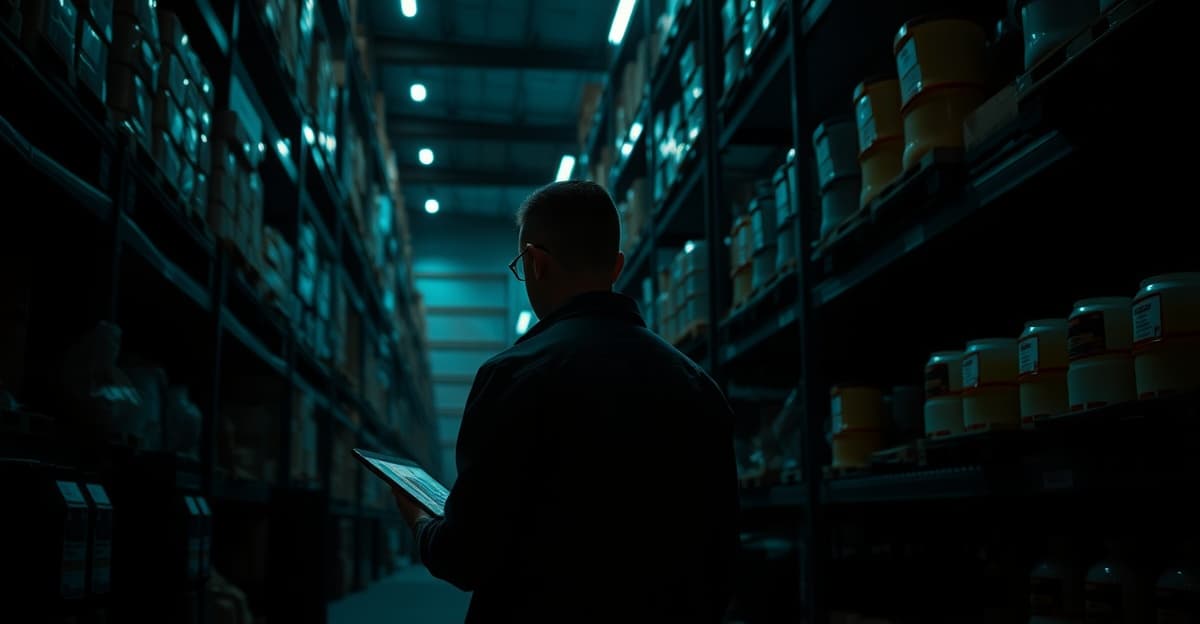
How a commercial assistant based on official knowledge base accelerates distributor team readiness. PACE Framework + practical case in chemical industry.
"How long does it take your distributor to train a salesperson who can argue technically about your products?"
The question is uncomfortable because the answer is rarely encouraging. Industry benchmarks show that the average time for a B2B salesperson to reach full productivity is 10-12 months. For distributors handling complex technical catalogs, this number can be even higher.
The problem isn't lack of material — your company likely has manuals, technical sheets, and detailed specifications. The problem is that 85% of distributors report difficulty accessing technical information during the sales process. Result: 27% of opportunities are lost due to partners' lack of technical knowledge.
Meanwhile, 73% of B2B sales interactions involve technical questions that require specialized documentation consultation. Your channel salespeople need this information in seconds, not weeks of training.
The scenario is familiar: your company invests millions in R&D, documents everything in impeccable technical specifications, trains distributors at face-to-face events. Six months later, the distributor's salesperson still calls headquarters before answering a basic technical question from a client.
Why does this happen? Not from lack of available knowledge. It's because there's a gap between having access to a 400-page manual and knowing which paragraph answers the specific question the client is asking during the call.
The root cause: Industrial technical knowledge lives structured for engineers, not for salespeople in active commercial situations. Technical sheets are organized by product, not by customer problem. Manuals follow feature logic, not sales argumentation.
In projects we've tracked, we observe a pattern: distributors with access to the same official technical base show 40-60% variations in closing rates between their salespeople. The difference isn't in the material — it's in the speed and accuracy with which they can connect the client's technical problem to the correct solution.
Picture a company with a technical catalog spanning hundreds of sheets and a distributor network of similar scale: closing rates vary widely between salespeople, technical competence takes many months to build, and turnover runs high, largely due to frustration with the learning curve.
The math is harsh: your average B2B sales cycle is 3-6 months, but your channel salesperson needs 10-12 months to be technically ready. During this gap, how many consultative sales do you lose?
The solution isn't more training — it's architecting technical knowledge to be consumable in commercial context. AI-based commercial assistants reduce onboarding time by 43% and increase win rate by 18%.
But not just any assistant. It needs to be structured specifically on your company's official base, following a methodology that connects technical documentation with measurable commercial execution.
Analyzing successful implementations of commercial assistants in indirect channels, we observe a consistent pattern in 4 stages: PACE (Prepare, Access, Contextualize, Execute) — a structured approach that successful cases follow to transform industrial technical knowledge into accelerated commercial readiness.
The first step isn't technology — it's curation. Your official technical base needs to be reorganized for commercial consumption, not just technical.
Process:
In a recent project, we organized 1,200 technical documents from an electronics components manufacturer. The structuring allowed salespeople to find relevant specifications in less than 30 seconds — previously it took 15 minutes consulting physical catalogs.
Having curated information isn't enough — it needs to be available at the right time and format. 67% of B2B sales reps spend less than 4 hours per week actively selling, according to Salesforce State of Sales Report. They don't have time to navigate complex systems.
Ideal access characteristics:
An industrial equipment distributor implemented an interface that integrates technical specifications with their CRM. Result: average time to answer client technical questions dropped from 15 minutes to 2 minutes, allowing resolution during the commercial call itself.
Here's the differentiator: AI trained specifically on your official base, capable of mapping real client problems to precise technical solutions, including contextualized commercial argumentation.
Contextualization layers:
A chemical industry structured AI that analyzes the industrial application mentioned by the client and suggests not just the base product, but technical complements that optimize performance. 34% increase in average order value via automated technical recommendations.
The framework only works if you can measure both utilization and impact. Clear metrics connect commercial assistant usage with individual performance and business results.
Essential dashboard:
The average ROI of AI sales enablement implementations in indirect channels is 312%. But it's only measurable if you structure metrics from the beginning.
Curious how much sales readiness is worth to your team? Calculate it in 2 minutes.
Calculate the ROITo see how PACE plays out, consider a typical B2B industrial company with a complex technical catalog and a distributor network facing the challenges described above: salespeople need a long ramp-up to reach basic technical competence, closing rates vary widely between reps who have access to the same official base, and a meaningful share of technical questions still gets escalated to headquarters instead of resolved on the call.
Typical operational challenge:
Implementation following the PACE pattern:
Weeks 1-2 - Prepare:
Week 3 - Access:
Week 4 - Contextualize:
Pilot - Execute:
When this approach is executed well, the pattern we consistently see is a meaningful drop in technical readiness time and a lift in closing rates, as salespeople start finding the right technical answer during the client conversation instead of waiting on training or leaning on a handful of top performers.
The key is connecting official technical knowledge with measurable commercial execution. The assistant doesn't replace salespeople's knowledge — it shortens the competence curve and enables consultative selling earlier in the ramp-up.
The average time for a B2B salesperson to reach full productivity is 10-12 months, and for distributors handling complex technical catalogs, this number can be even higher. This creates a significant gap since the average B2B sales cycle is 3-6 months, meaning your channel salesperson needs 10-12 months to be technically ready while missing opportunities during this learning period.
27% of opportunities are lost due to partners' lack of technical knowledge, primarily because 85% of distributors report difficulty accessing technical information during the sales process. This happens despite 73% of B2B sales interactions involving technical questions that require specialized documentation consultation.
PACE stands for Prepare, Access, Contextualize, and Execute - a four-stage approach to transform industrial technical knowledge into accelerated commercial readiness. It involves curating your official knowledge base for commercial consumption, ensuring intelligent availability during sales processes, using AI to connect specific problems to technical solutions, and measuring both utilization and commercial impact.
AI-based commercial assistants reduce onboarding time by 43% and increase win rate by 18%. The average ROI of AI sales enablement implementations in indirect channels is 312%, but this is only achievable when you structure metrics and measurement from the beginning.
Results vary by starting point — catalog complexity, distributor network size, and how technical the sales process is — but the consistent pattern is a meaningful reduction in technical readiness time and an increase in closing rates, since salespeople find the right technical answer during the client conversation instead of escalating to headquarters. We recommend running a pilot to establish your own baseline before setting targets.
Complete implementation from kickoff to rollout for all distributors typically takes 2-3 months, with the framework executable in 4 weeks following the PACE methodology. Measurable ROI appears between the 4th and 6th month, accelerating as salespeople incorporate the assistant into their daily commercial process.
Based on implemented projects, we've structured an executable roadmap to replicate similar results in your indirect channel operation.
Main activities:
Required resources:
Deliverable: Structured technical base, defined taxonomy, documented governance process.
Interface development:
AI configuration:
Metrics setup:
Deliverable: Functional assistant, active CRM integration, configured metrics dashboard.
Structured pilot:
Impact validation:
Refinement:
Deliverable: Validated pilot, established baseline metrics, rollout plan for 100% of team.
Weekly dashboard: Usage per salesperson, performance correlation, identified knowledge gaps Monthly update: New products, technical changes, incorporated field feedback Quarterly analysis: Cumulative ROI, readiness impact, expansion opportunities Evolution: New modules (pricing, competition, cross-sell) based on initial success
Essential monitoring metrics:
Complete implementation — from kickoff to rollout for all distributors — typically takes 2-3 months. Measurable ROI appears between the 4th and 6th month, accelerating as salespeople incorporate the assistant into daily commercial process.
Want to accelerate your distributors' technical readiness from 10-12 months to 3-4 months? Learn how to measure distributor sales force commercial readiness and see the complete framework to train distributor priority mix without face-to-face.
In 15 minutes, we map your critical front and design the fastest path to connect your official technical base with measurable commercial readiness. Schedule a demonstration — no commitment, you leave with the diagnosis of the best plan for your operation.

Co-founder and Product Manager at Evous. Writes about how product and the GTDI method connect knowledge to action at the commercial front line.
In 15 min we'll show how to prepare your sales team to act with the right knowledge and measure the impact in pipeline.